
Designs & Builds Top-tier Electronic Devices for a Connected World
Electronic device designing refers to the process of creating and developing electronic systems or products that serve specific functions. It encompasses the conceptualization, design, simulation, prototyping, and production of devices that operate on electrical energy. The design process is multidisciplinary, combining principles of electronics, physics, software engineering, and materials science.
Lab Automation
Behind the Scenes of a Smart Lab: The Role of Firmware in Modern Laboratory Automation
Laboratory Device Automation
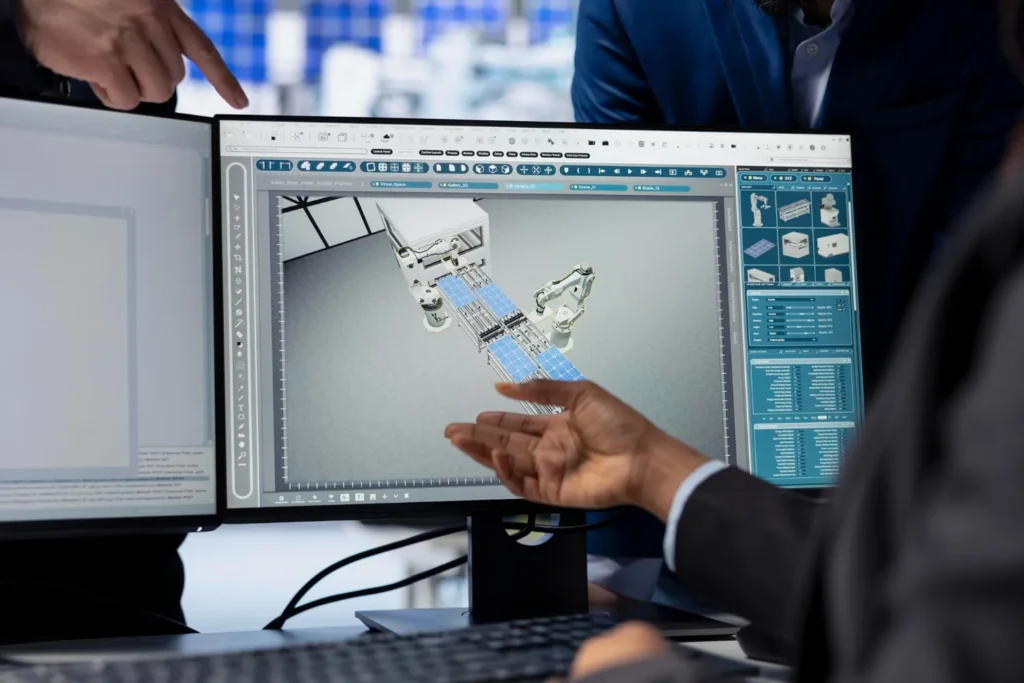
Laboratory Device Automation in electronic device designing refers to the use of automated systems and robotics to streamline the design, testing, and development processes for electronic devices. This automation can enhance the efficiency and precision of various stages of the device design process, from prototype development to final product testing. By integrating lab automation into electronic device design, manufacturers and researchers can achieve faster time-to-market, improve accuracy, reduce human error, and handle complex tasks at a larger scale.
Lab Software Algorithms & Methodologies
In electronic device designing, specialized lab software algorithms and methodologies are crucial for streamlining the design, testing, and validation processes. These software solutions combine algorithms from various engineering fields, including electrical, mechanical, and computer science, to optimize performance, reduce development cycles, and ensure the reliability of electronic devices.
Automated Clinical Analysis & Diagnosis
Automated Clinical Analysis and Diagnosis in Electronic Device Designing refers to the integration of automated technologies and algorithms into electronic devices, such as wearable medical devices, diagnostic tools, and point-of-care systems, to assist in clinical decision-making. These systems help in monitoring patient health, analyzing clinical data, and diagnosing medical conditions without direct human intervention. This combination of hardware and software can revolutionize healthcare by improving efficiency, accuracy, and accessibility.
Solutions Expertise Into..
Architecture to PCBs Design Services
Designing an electronic device from the system architecture level to PCB (Printed Circuit Board) involves a multi-step process that integrates hardware design..

Module based System Designs
It refers to the practice of designing electronic systems by breaking down complex designs into smaller, manageable, and reusable modules.

Wearable Devices & Smart Devices
Wearable devices and smart devices represent two prominent categories in electronic device design, offering a range of functionalities that integrate seamlessly with daily life.

Domains we serve
Lab Automation
Lab Automation refers to the use of technology to perform laboratory tasks and processes with minimal human intervention.
Cheminformatics
We have worked in ChemInformatics niche providing services in data mining and analysis, chemical structure representation..
Synthetic Biology
Synthetic Biology involves the design and construction of new biological parts, devices, and systems, as well as the re-design of existing natural biological systems..
Synthetic Biology
Synthetic Biology involves the design and construction of new biological parts, devices, and systems, as well as the re-design of existing natural biological systems..
Electronic Device Designing
Electronic device designing refers to the process of creating and developing electronic systems or products that serve specific functions..
Health Analytics
Health Analytics in Healthcare involves the use of data analysis tools and techniques to improve patient care, optimize operations..
Synthetic Biology
Synthetic Biology involves the design and construction of new biological parts, devices, and systems, as well as the re-design of existing natural biological systems..
Synthetic Biology
Synthetic Biology involves the design and construction of new biological parts, devices, and systems, as well as the re-design of existing natural biological systems..
FAQ
Frequently Asked Questions
UVJ's Electronic Device Design software capabilities span six core areas: Architecture to PCB Design (schematic capture, simulation, DRC/ERC, layout tools); Module-Based System Designs (component management, SPICE/HDL simulation, hardware-software co-design); Carrier & Add-on Board Designs (EDA tools, DFM, HIL simulation, firmware integration); Board Signal Integrity & PCB Design (EMC analysis, crosstalk simulation, trace routing optimization); CAD Designs for Multilayer PCBs (multilayer stack-up management, thermal simulation, high-speed signal tools); and Wearable & Smart Device Software (embedded firmware, RTOS, sensor integration, Edge AI, OTA updates, BLE/Wi-Fi connectivity).
UVJ engineers the full software toolchain for the Architecture-to-PCB pipeline. This includes schematic capture tools for creating digital circuit representations; PCB layout and routing software with automated and interactive routing capabilities; simulation and analysis tools for verifying circuit performance before physical prototyping; component and library management systems; Design for Testability (DFT) and Design for Manufacturability (DFM) validation; mechanical integration for enclosure fit; AI-assisted layout optimization for component placement; and Digital Twin environments where the virtual PCB model is updated in real time as design changes occur — compressing the time from architectural spec to manufacturable board design.
Yes. UVJ develops CAD-based software solutions for multilayer PCB designs — boards that contain multiple stacked layers of copper traces, power planes, ground planes, and signal layers within a single compact structure. Multilayer PCBs are essential in space-constrained, high-performance devices such as smartphones, medical implants, and avionics systems. The key software challenges UVJ solves include multilayer stack-up definition and management; layer-specific signal routing to prevent interference between layers; high-speed signal integrity analysis across the full cross-section; thermal simulation to manage heat across densely populated layers; DRC and ERC checking for manufacturability validation; and Gerber file generation for production-ready output.
Firmware is the embedded software that directly controls the hardware components of an electronic device — sensors, actuators, displays, communication interfaces, and processors. UVJ's firmware development capabilities include low-level C/C++ programming for microcontrollers and SoCs; Real-Time Operating System (RTOS) integration (FreeRTOS, Zephyr, VxWorks); device driver development for hardware peripherals; OTA (over-the-air) firmware update implementation; hardware abstraction layers for portability across processor families; power optimization for battery-operated devices; and integration with cloud platforms, mobile apps, and LIMS systems for connected device ecosystems. Our firmware is built with compliance to FDA, IEC 62304 (medical software lifecycle), and IPC standards from the ground up.
Wearable and smart devices in healthcare — such as ECG monitors, glucose trackers, pulse oximeters, remote patient monitoring systems, and smart drug delivery devices — require a deeply integrated software stack. UVJ develops the full software layer for these devices, including embedded firmware for biosensor data acquisition; RTOS-based task scheduling for real-time health monitoring; Edge AI and ML algorithms for on-device anomaly detection and activity recognition; Bluetooth Low Energy (BLE) and Wi-Fi connectivity stacks; mobile application backends for data visualization and user interaction; cloud integration for long-term data storage and clinical analytics; HIPAA-compliant data encryption and secure transmission protocols; and OTA update pipelines. Our medical wearable software is built to meet FDA and ISO 13485 regulatory requirements.
Regulatory compliance is built into UVJ's development process from day one rather than added as a final checklist. For medical devices, we follow FDA 21 CFR Part 820 (Quality System Regulations), IEC 62304 (Medical Device Software Lifecycle), and HIPAA (data security) standards. For consumer electronics, we build for CE, FCC, and RoHS compliance. For automotive applications, we align with AEC-Q100 reliability standards and ISO 26262 functional safety requirements. For industrial platforms, we apply IPC design standards and IEC 61508 safety integrity levels. Documentation, version control, change management, and validation reporting are structured to support regulatory submissions and audits.
Related Blogs